
This Baklava Cheesecake layers crispy, buttery phyllo with creamy ricotta filling and a drizzle of golden honey. I first tried Baklava Cheesecake at a Greek festival years ago, and the combination of flaky pastry, crunchy nuts, and sweet syrup stuck with me. This version brings those same flavors into cheesecake form, and the best part? No fussy water bath or complicated rolling required.
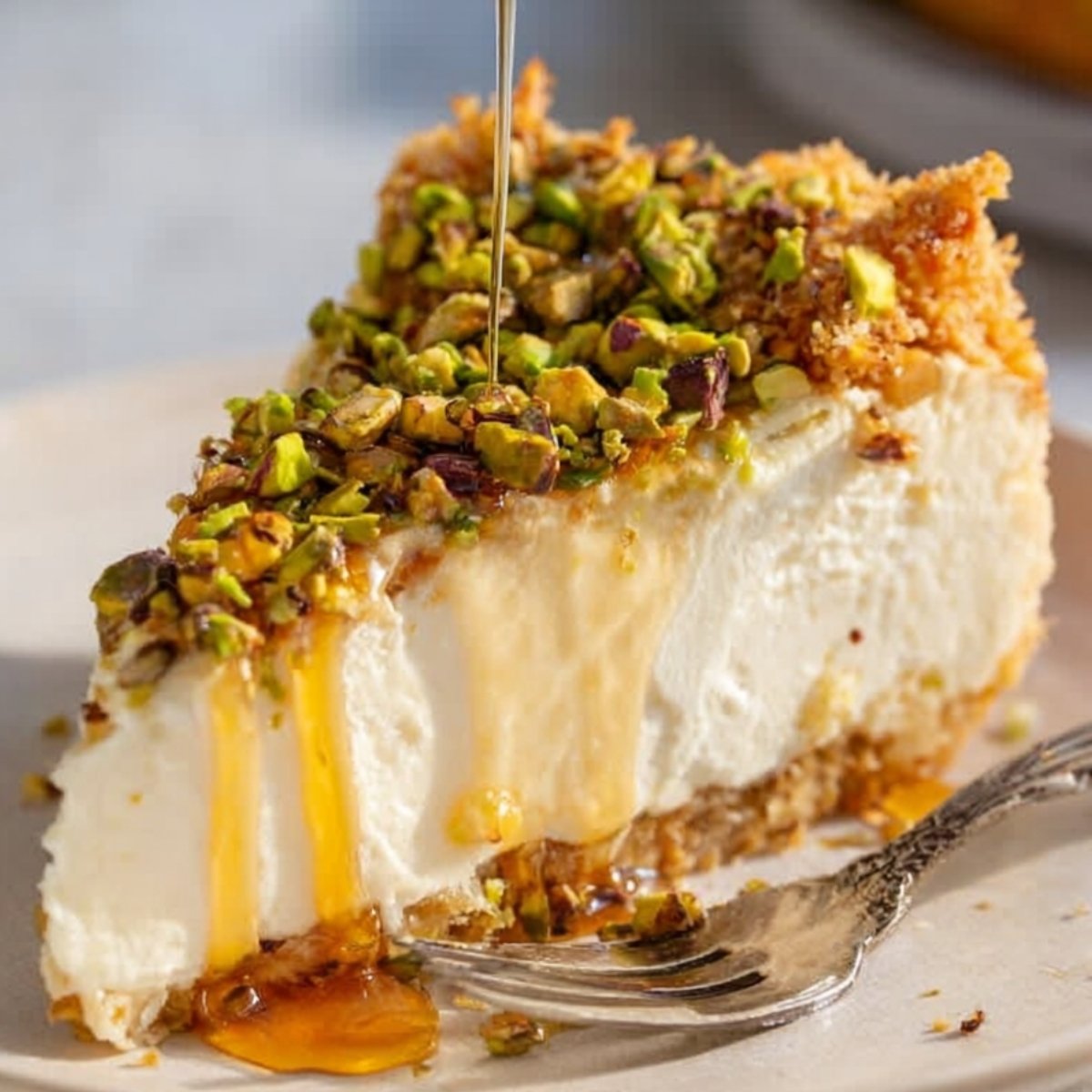
If you're looking for an impressive dessert that's easier than it looks, you'll love how this one comes together. Pair it with a warm dessertrecipe after dinner, or serve it alongside Mango Tapioca Pudding for a dessert spread that feels special.
Why You'll Love This Baklava Cheesecake
This dessert looks like you spent hours on it, but the actual hands-on time is pretty minimal. The phyllo crust comes together fast, and the ricotta filling whips up in one bowl. You don't need any special techniques or fancy equipment just a springform pan and a mixer.
The flavor combination is what really makes it shine. You get the crunch of pistachios and walnuts, the warmth of cinnamon, the creaminess of ricotta, and that sweet, floral honey drizzle. It's rich without being heavy, and the orange zest keeps it from feeling too sweet.
Jump to:
Baklava Cheesecake Ingredients
Here's what you'll need to make this cheesecake with phyllo crust and honey-nut topping.
See Recipe Card Below This Post For Ingredient Quantities
For the Phyllo Crust:
- Extra virgin olive oil: Brushed between the phyllo layers to create a crispy, golden crust. Olive oil adds a subtle richness that butter can't quite match.
- Walnuts, chopped (⅓ cup, plus more for garnish): Adds a deep, earthy flavor and a satisfying crunch. Toasting them lightly before chopping brings out even more flavor.
- Pistachios, chopped (⅓ cup, plus more for garnish): Brings a slightly sweet, buttery taste and a pop of green color. Use raw or roasted pistachios, whatever you have.
- Sugar (2 tablespoons): Sweetens the nut mixture just enough to balance the spices.
- Ground cinnamon (1 teaspoon): Gives the crust that warm, spiced flavor you expect from Baklava Cheesecake.
- Phyllo dough (10 sheets, thawed if frozen): Forms the crispy base and edges of the cheesecake. Handle it gently, and don't worry if a few sheets tear—they'll bake up beautifully anyway.
For the Cheesecake:
- Whole milk ricotta cheese (3 pounds, strained and room temperature): The base of the filling. Ricotta makes the cheesecake light and airy instead of dense. Make sure it's room temperature so it mixes smoothly.
- Large eggs (8, at room temperature): Binds the filling and helps it puff up as it bakes. Room temperature eggs blend more easily and create a fluffier texture.
- Sugar (1 ¼ cups): Sweetens the filling without overpowering the other flavors.
- Vanilla extract (1 teaspoon): Adds a warm, sweet note that rounds out the ricotta.
- Oranges, zested (2 large, divided): Brings a bright, citrusy flavor that cuts through the richness. Half goes into the batter, and the rest is saved for garnish.
- Honey (¼ to ⅓ cup): Drizzled over the finished cheesecake for that classic baklava sweetness. Warm it slightly so it pours easily.
how to make Baklava Cheesecake
Follow these steps to build your cheesecake from the phyllo crust up.
- Preheat oven: Set your oven to 350°F and position a rack in the middle. Brush a 10-inch springform pan with olive oil, then place it on a large sheet pan to catch any drips.
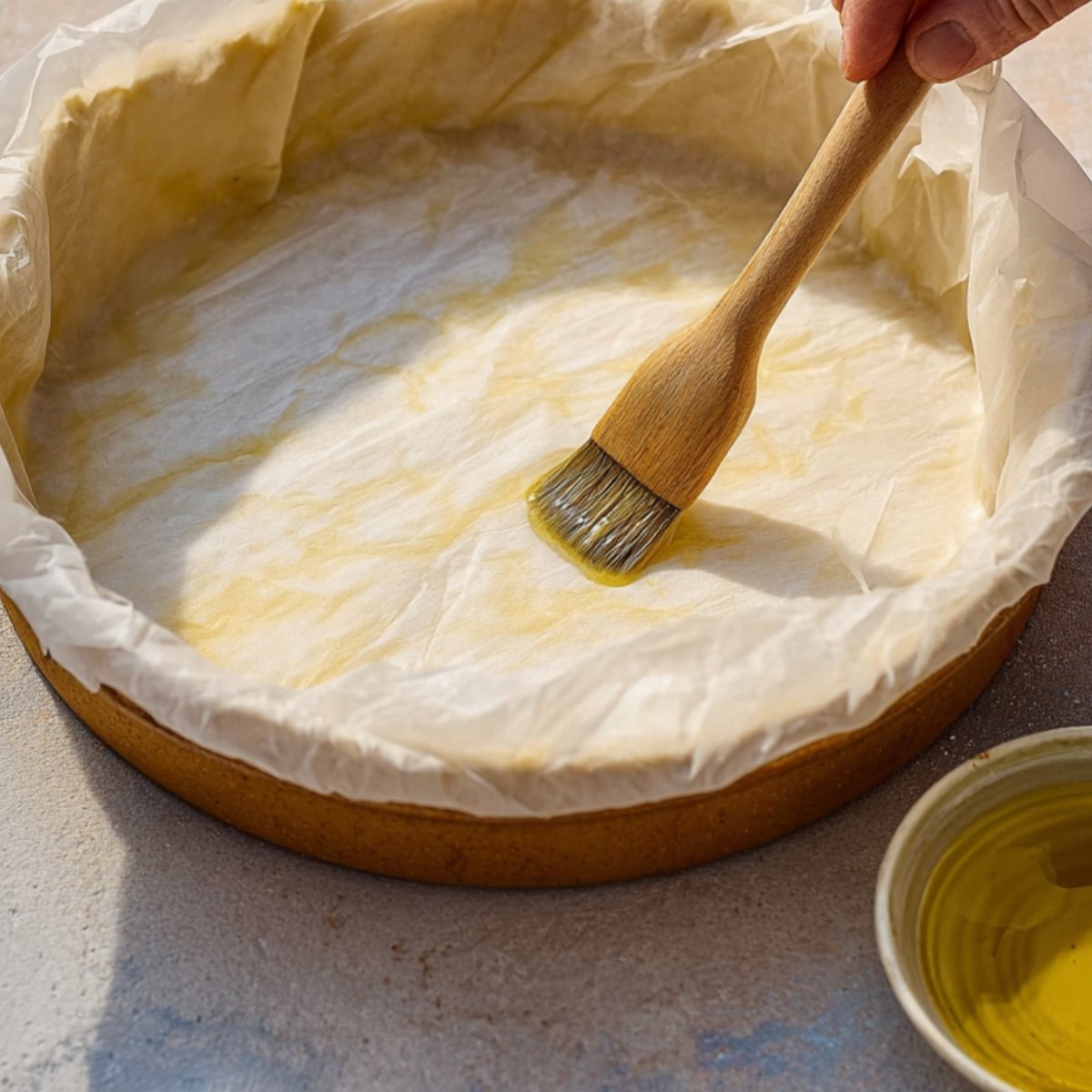
- Prepare the nut mixture: In a small bowl, toss together the chopped walnuts, pistachios, sugar, and cinnamon until everything is evenly coated. Set it aside while you work on the phyllo.
- Assemble the phyllo crust: Lay two sheets of phyllo in the prepared pan, pressing gently so they line the bottom and sides. Brush them with olive oil, making sure to get the edges that hang over the pan. Lay three more sheets on top, rotating the pan as you go so the phyllo covers all sides with overlapping layers. Brush with oil again, then sprinkle the nut mixture evenly over the phyllo. Layer the remaining phyllo sheets over the nuts, brushing each layer with oil as you go. Trim or fold any excess phyllo hanging over the sides so it sits neatly in the pan.
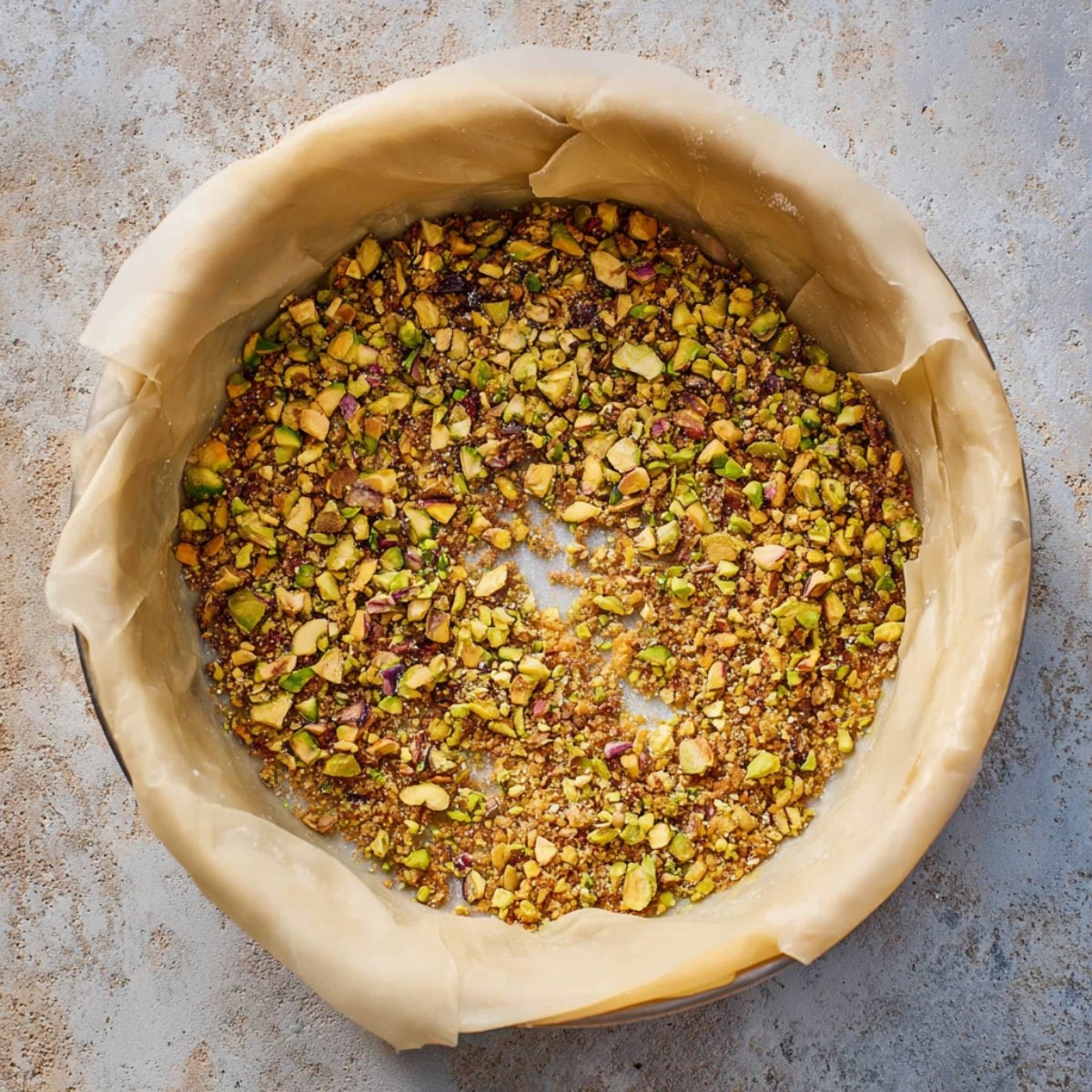
- Prepare the cheesecake batter: In a stand mixer fitted with a paddle attachment, combine the ricotta, eggs, sugar, vanilla extract, and half of the orange zest. Start on low for 1 to 2 minutes to bring everything together, then increase to medium-low and mix for about 10 minutes until the batter is light and fluffy. If you're using a hand mixer or spoon, just mix until the texture looks airy and smooth.
- Assemble and bake: Pour the cheesecake batter into the prepared phyllo crust, spreading it evenly. Bake for 1 to 1 ½ hours, or until the batter is mostly firm and the top of the crust has turned a golden brown. If the phyllo starts browning too fast, lower the oven temperature to 325°F.
- Cool: Remove the cheesecake from the oven and set it on a wire rack to cool for 1 to 2 hours. Once it's cooled to room temperature, transfer it to the fridge and chill for at least 6 hours, or overnight if you can wait.
- Finish and serve: Warm the honey by placing it in a glass bowl set inside a bowl of warm water for 5 to 10 minutes. Remove any excess phyllo dough hanging over the cheesecake, then release the springform pan and transfer the cheesecake to a platter. Garnish with chopped nuts, the remaining orange zest, and drizzle with the warmed honey.
Substitutions and Variations
Ricotta: If you can't find whole milk ricotta, you can use part-skim, but the texture will be slightly less creamy. You could also try a blend of ricotta and cream cheese for a denser filling.
Nuts: Swap the walnuts for pecans or almonds if that's what you have. Hazelnuts would also work well here.
Honey: Maple syrup or agave can stand in for honey, though the flavor will be a little different. Honey gives you that traditional Baklava Cheesecake sweetness.
Phyllo dough: If you're feeling adventurous, you could use crushed graham crackers or a nut-based crust instead, but you'll lose that crispy, flaky texture that makes this special.
Orange zest: Lemon zest works just as well and gives a slightly sharper citrus note.
EQUIPMENT
10-inch springform cake pan: The removable sides make it easy to release the cheesecake without damaging the phyllo crust.
Standing mixer or hand mixer: Helps whip the ricotta filling until it's light and fluffy. You can also mix by hand, but it'll take a little more elbow grease.
Large sheet pan: Catches any drips from the springform pan while the cheesecake bakes.
Small bowl for mixing nuts: Just something to toss the nut mixture together.
Wire rack: Lets the cheesecake cool evenly after baking.
How to Store Baklava Cheesecake
Store the Baklava Cheesecake in the fridge, covered with plastic wrap or in an airtight container. It'll keep for up to 5 days, though the phyllo crust will soften slightly over time.
You can freeze slices if you want to make this ahead. Wrap individual slices tightly in plastic wrap, then place them in a freezer-safe bag or container. They'll keep for up to 2 months. Thaw slices in the fridge overnight before serving.
Serving Suggestions
This Baklava Cheesecake is rich, so a little goes a long way. Serve slices with a cup of strong coffee or tea to balance the sweetness. A dollop of whipped cream or a scoop of vanilla ice cream on the side makes it even more indulgent.
If you're serving this at a gathering, pair it with lighter desserts like Blueberry Upside Down Cake or fresh fruit. The contrast in textures and flavors keeps things interesting.
You could also drizzle extra honey or a sprinkle of cinnamon over each slice right before serving. A few fresh berries on the side add a pop of color and a tart note that cuts through the richness.
For a cozy evening, serve this with Italian Love Cake and let everyone linger at the table a little longer.
Expert Tips
Strain your ricotta: If your ricotta seems watery, strain it through a fine-mesh sieve for 30 minutes before mixing. This keeps the filling from getting too loose.
Work quickly with phyllo: Phyllo dries out fast, so keep the sheets covered with a damp towel while you're assembling the crust. Don't stress if a few sheets tear—just patch them with another piece and keep going.
Room temperature ingredients: Make sure your ricotta and eggs are at room temperature before mixing. This helps everything blend smoothly and creates a lighter texture.
Don't skip the chilling time: The cheesecake needs at least 6 hours in the fridge to set properly. Overnight is even better. If you try to slice it too soon, the filling won't hold its shape.
Warm the honey: Cold honey is thick and hard to drizzle. Warming it in a bowl of hot water makes it pourable and easier to spread over the top.
Watch the crust: Phyllo can go from golden to burnt pretty quickly. If the edges start browning too fast, tent the cheesecake with foil or lower the oven temperature.
FAQ
What is a baklava cheesecake?
It's a Baklava Cheesecake that borrows the flavors and textures of Baklava Baklava Cheesecake crispy phyllo, chopped nuts, warm spices, and honey combined with a creamy ricotta filling. You get the best of both desserts in one slice. My family loves it because it feels special without being too complicated.
Is Baklava Cheesecake actually Greek or Turkish?
That's been debated for a long time. Both cultures have their own versions, and similar desserts show up all over the Middle East and Mediterranean. The exact origins are hard to pin down, but what matters is that it's delicious no matter where it comes from.
Is baklava cheesecake good?
It really is. You get the crunch of the phyllo, the richness of the ricotta, and the sweetness of honey all in one bite. It's a nice change from traditional Baklava Cheesecake, and it always impresses guests. Even people who aren't usually big on dessert tend to go back for seconds.
What exactly is a Baklava Cheesecake?
Baklava Cheesecake is a layered pastry made with thin sheets of phyllo dough, chopped nuts (usually walnuts or pistachios), butter, and a sweet syrup or honey. The layers are baked until crispy and golden, then soaked in the syrup while still warm. It's sweet, nutty, and incredibly satisfying.
Related
Looking for other recipes like this? Try these:
Pairing
These are my favorite dishes to serve with Baklava Cheesecake
Baklava Cheesecake
Ingredients
Method
- Preheat the oven to 350°F and position a rack in the center. Brush a 10-inch springform pan with olive oil, then place it on a large sheet pan.
- In a small bowl, mix the chopped walnuts, pistachios, sugar, and cinnamon. Set aside.
- Lay two sheets of phyllo dough in the oiled springform pan, pressing gently to cover the bottom and sides. Brush with olive oil. Continue layering with three more sheets of phyllo, overlapping and rotating the pan to cover all sides. Brush each sheet with olive oil. Sprinkle the nut mixture evenly over the phyllo.
- Add the ricotta cheese, eggs, sugar, vanilla extract, and half of the orange zest into the bowl of a stand mixer fitted with a paddle attachment. Mix on low for 1–2 minutes, then increase to medium-low for 10 minutes, or until the mixture is light and fluffy.
- Pour the cheesecake batter into the prepared crust. Bake in the preheated oven for 1 to 1 ¼ hours, or until the batter is mostly firm, and the phyllo crust is golden brown. The center of the cheesecake should still jiggle slightly but will firm up as it cools.
- Remove the cheesecake from the oven and let it cool on a wire rack for 1 to 2 hours. Then, refrigerate for at least 6 hours or overnight.
- To finish, place the honey in a glass bowl and set it in a larger bowl of warm water. Let the honey warm for 5-10 minutes, stirring occasionally until it becomes pourable.
- Carefully remove any excess phyllo dough that may make it difficult to release the cheesecake from the pan. Release the sides of the springform pan and transfer the cheesecake to a platter. Drizzle with the warmed honey, garnish with chopped walnuts, pistachios, and the remaining orange zest.
Leave a Reply