
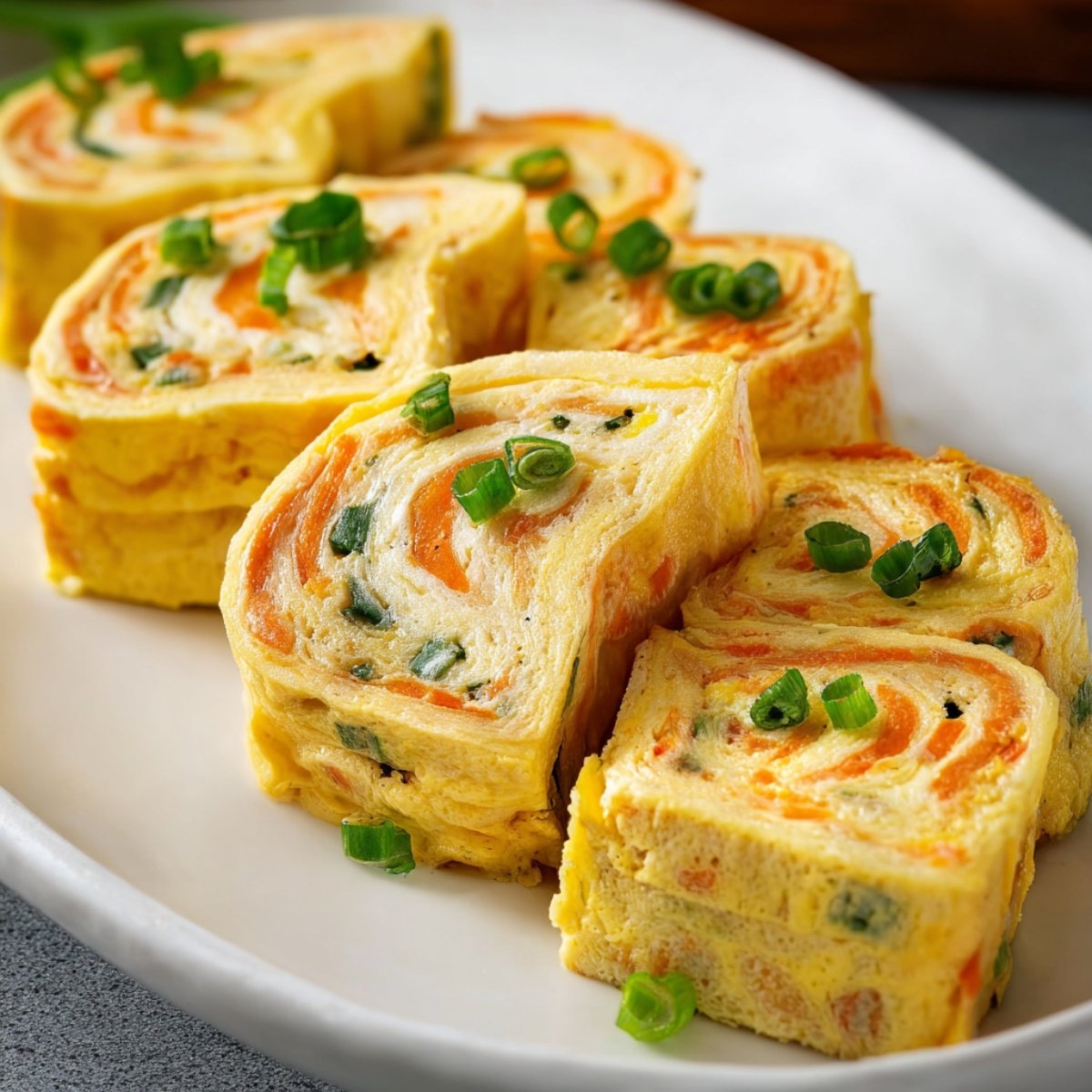
These tender, savory egg rolls with bright green onions and sweet carrots are the kind of breakfast that feels like a hug on a plate. I first tried Korean rolled omelette at a friend's house years ago, and I've been hooked ever since the way each slice reveals those colorful ribbons of vegetables is so pretty, and honestly, it's ready faster than waiting for toast.
If you're looking for something protein-packed and totally doable on a busy morning, try pairing this with our Cheesy Garlic Cruffins for a complete meal, or serve it alongside Egg Mayo Sandwich for a cozy brunch spread that'll make everyone happy.
Why You'll Love This Korean Rolled Omelette
This colorful Korean rolled omelette is one of those recipes that earns its spot in your weekly rotation without even trying. It comes together in just 10 minutes, uses ingredients you probably already have, and delivers serious flavor with minimal fuss. The eggs cook up soft and savory, and the vegetables add color and texture without overwhelming the dish.
It's also incredibly versatile. Serve it warm for breakfast, pack it cold in a lunchbox, or slice it up as a side dish next to rice and kimchi. Kids love the fun spiral shape, and adults appreciate how filling and nutritious it is without feeling heavy. Plus, with only one pan to clean, it's the kind of easy win that makes weekday cooking feel manageable.
Jump to:
Korean Rolled Omelette Ingredients
Here's what you'll need to make this savory egg roll at home.
See Recipe Card Below This Post For Ingredient Quantities
- Eggs: The base of this dish, providing structure, richness, and protein.
- Onion, chopped: Adds a mild, fresh flavor and bright green color throughout the omelette.
- Carrot, chopped or grated: Brings a touch of natural sweetness and a pop of orange that makes each slice look beautiful.
- Salt: Enhances all the flavors and balances the richness of the eggs.
- Black or white pepper: Adds a subtle warmth without overpowering the delicate egg flavor.
- Neutral oil: Keeps the eggs from sticking and helps them cook evenly in the pan.
how to make Korean Rolled Omelette
This simple Korean Rolled Omelette side dish comes together in just a few easy steps.
- Prepare the egg mixture: In a bowl, whisk eggs well with salt and pepper. Add the chopped carrots and green onions, then whisk again until fully combined and the vegetables are evenly distributed throughout.
- Cook the first layer: Heat a 10-inch non-stick pan over low heat. Add the oil, then pour in ⅓ of the egg mixture. Tilt the pan to spread it evenly across the surface. As the eggs cook, lift the edges with a rice paddle or spatula and let the uncooked egg mixture flow to the edges. Roll the omelette gently when the top is almost set but still slightly wet and glossy.

- Roll and add the next layer: Once the omelette is fully rolled, gently pull it to one side of the pan. Add the second third of the egg mixture, tilting the pan to fill the empty spaces and letting it flow underneath the rolled portion. Continue cooking the egg and rolling it over the first roll until the top is set but slightly wet.
- Repeat and finish: Roll the omelette once more to the other side of the pan. Add the remaining ⅓ of the egg mixture, tilting the pan again to let the egg fill in the gaps and coat the bottom. Once the omelette is fully rolled into a thick log, transfer it to a cool surface and let it rest for a couple of minutes to set completely.
- Serve: Cut the omelette into 6 to 8 pieces using a sharp knife. If you used a round pan, trim the tapered ends for a more uniform appearance. Enjoy immediately while warm, or allow it to cool completely before storing.
Substitutions and Variations
This rolled omelette recipe is flexible and easy to customize based on what you have on hand.
Vegetables: Swap the carrots for finely chopped bell peppers, zucchini, or mushrooms. You can also add a handful of spinach or add some chopped kimchi for extra flavor and a spicy kick.
Protein additions: Stir in some cooked, crumbled sausage, diced ham, or shredded crab for a heartier version.
Cheese: Add a sprinkle of shredded mozzarella or cheddar to the egg mixture for a richer, creamier texture.
Seasonings: Try a pinch of garlic powder, a dash of soy sauce, or a sprinkle of sesame seeds for a different flavor profile.
Oil: Use sesame oil instead of neutral oil for a deeper, nuttier taste that pairs beautifully with the eggs.
EQUIPMENT
10-inch non-stick pan: Essential for easy rolling and preventing the eggs from sticking.
Rice paddle or spatula (optional, for rolling): Helps you lift and roll the omelette without tearing the delicate layers.
Storage and Reheating Tips
Store any leftover Korean Rolled Omelette in an airtight container in the refrigerator for up to 3 days. The omelette tastes great cold, making it perfect for lunchboxes or quick snacks straight from the fridge.
To reheat, warm individual slices in the microwave for 20 to 30 seconds, or heat them gently in a pan over low heat for a minute or two. You can also enjoy it at room temperature—the flavor and texture hold up beautifully either way.
For longer storage, wrap the omelette tightly in plastic wrap and freeze for up to 1 month. Thaw overnight in the refrigerator before reheating.
Serving Suggestions
This savory egg roll pairs beautifully with a variety of dishes and makes a wonderful addition to any meal.
Serve it warm alongside a bowl of steamed rice and kimchi for a traditional Korean Rolled Omelette breakfast. It also works perfectly as part of a banchan spread with other small side dishes like pickled radish and seasoned spinach.
For a heartier meal, enjoy it with our Fluffy Cottage Cheese Egg Muffins or Spicy Tomato Bruschetta for a fun fusion brunch. You can also pack it cold in lunchboxes with some fresh fruit and crackers for a protein-packed midday meal.
Try serving it with a drizzle of soy sauce or a dollop of gochujang mayo on the side for extra flavor. The tender, savory slices also taste delicious tucked into a wrap with lettuce and a smear of cream cheese.
Expert Tips
Use low heat: Cooking the eggs slowly over low heat prevents them from browning too quickly and keeps the texture soft and tender. Rushing this step can lead to tough, rubbery eggs.
Whisk thoroughly: Make sure the eggs are well-beaten and the vegetables are evenly distributed. This ensures every bite has the same delicious flavor and the omelette rolls smoothly.
Don't wait for the eggs to fully set: Roll the omelette while the top is still slightly wet and glossy. This helps the layers stick together and creates a cohesive roll instead of separate sheets.
Keep the pan moving: Tilt and swirl the pan as you add each layer of egg mixture so it spreads evenly and flows under the rolled portion. This technique keeps the omelette uniform and prevents gaps.
Use a non-stick pan: A good non-stick surface is essential for easy rolling and cleanup. If your pan isn't non-stick, make sure to use enough oil to prevent sticking.
Let it rest: Allowing the finished omelette to cool for a couple of minutes before slicing helps it hold its shape and makes cutting clean, beautiful slices much easier.
FAQ
What is Korean rolled omelette?
Korean rolled omelette, or Gyeran Mari, is a simple dish made by whisking eggs with chopped vegetables like green onions and carrots, cooking the mixture in thin layers, and rolling it up while still warm. It's often served as a side dish or banchan in Korean Rolled Omelette meals. My mom always says the key is keeping the heat low so the eggs stay soft and don't brown.
What exactly is omurice Korean Rolled Omelette?
Omurice is a different dish entirely—it's a Japanese comfort food where seasoned fried rice is wrapped in a thin omelette and topped with ketchup or demi-glace sauce. Korean rolled omelette is simpler, focusing on the eggs and vegetables without the rice filling. Both are delicious, but they're made and served in completely different ways.
What exactly is tamagoyaki?
Tamagoyaki is a Japanese rolled omelette that's typically sweetened with sugar or mirin and cooked in a rectangular pan. It has a slightly sweet flavor and a firmer, more layered texture compared to Korean rolled omelette, which is savory and uses a round pan. If you've ever had sushi with a sweet egg topping, that's usually tamagoyaki.
How does a Korean omelette differ from a Japanese one?
Korean rolled omelette is savory and often includes vegetables like green onions and carrots, while Japanese tamagoyaki tends to be sweeter and has a more custardy, dense texture. Korean versions are usually cooked in a regular round pan, while tamagoyaki uses a special rectangular pan for a more uniform shape. The rolling technique is similar, but the flavor profiles are pretty different.
Related
Looking for other recipes like this? Try these:


Pairing
These are my favorite dishes to serve with Korean Rolled Omelette


Korean Rolled Omelette
Ingredients
Method
- Whisk the eggs together with salt and pepper until smooth and slightly frothy.
- Add the chopped carrots and green onions to the egg mixture and whisk again.
- Heat the oil in a 10-inch non-stick pan over low heat. Once the oil is warm, pour in ⅓ of the egg mixture, spreading it evenly across the pan.
- As the eggs start setting, gently lift the edges with a spatula or rice paddle. When the top is almost set, carefully roll the omelette from one side.
- Push the rolled omelette to one side of the pan and add another ⅓ of the egg mixture. Tilt the pan to allow the egg to fill in the spaces. Once the edges set, roll the omelette again.
- Repeat the same process for the last ⅓ of the egg mixture, rolling the omelette and ensuring it cooks evenly.
- Remove the omelette from the pan and let it rest on a cool surface for a few minutes. After resting, cut it into 6 to 8 slices.
- Serve the omelette immediately or cool it completely before storing in the fridge.



Leave a Reply